About Business
Based on the information from the Wikipedia entry, here is a comprehensive overview of The Residency in Lucknow.
The Residency, Lucknow (British Residency)
The Residency, also known as the British Residency or the Residency Complex, is a historic group of buildings located in the heart of Lucknow, Uttar Pradesh. Once a place of grandeur and political power, it now stands as a protected monument and a haunting reminder of the events of the mid-19th century.
1. Historical Background
- Construction: The complex was built between 1780 and 1800. Construction began under the reign of Nawab Asaf-ud-Daula (who moved the capital from Faizabad to Lucknow) and was completed during the rule of Nawab Saadat Ali Khan II.
- Purpose: It served as the official residence of the British Resident General, who acted as the representative of the British East India Company at the court of the Nawabs of Awadh (Oudh).
- The Siege of Lucknow (1857): The Residency is most famous for being the site of the Siege of Lucknow during the Indian Rebellion of 1857. Between July 1 and November 17, 1857, British residents and loyalist forces were besieged within the complex by Indian revolutionaries.
2. Architecture and Layout
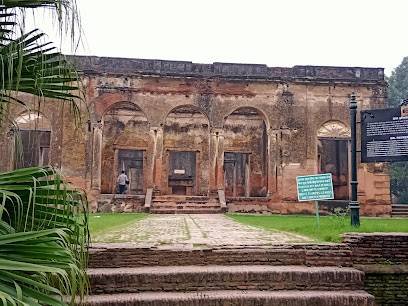
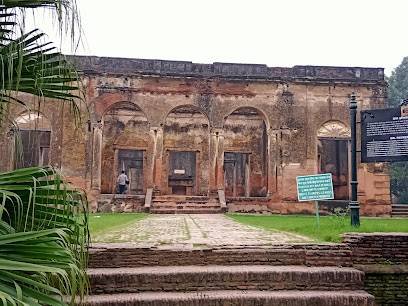
The Residency was once a sprawling, self-contained complex featuring bungalows, a banquet hall, a treasury, stables, and a church.
- Current State: The buildings suffered extensive damage from heavy shelling and gunfire during the 1857 siege. Since the British recaptured the city in 1858, the ruins have been preserved in their shattered state.
- The Ruins: Visitors can still see the scarred walls pitted with cannonball marks and bullet holes. The site is now surrounded by well-maintained lawns and flowerbeds.
- Key Landmarks:
- The Banquet Hall: Once a site of lavish parties, now a skeleton of arches and pillars.
- The Treasury: Located in the foreground of the complex.
- 1857 Memorial Museum: Located within the Residency, it houses artifacts, lithographs, and maps related to the events of 1857.
3. The Cemetery and Memorials
A nearby ruined church houses a cemetery where approximately 2,000 men, women, and children are buried.
- Sir Henry Lawrence: One of the most famous graves is that of Sir Henry Montgomery Lawrence, the British administrator who died during the siege. His epitaph famously reads: "Here lies the son of Empire who tried to do his duty."
- Other Memorials: A high cross stands as a memorial to those who perished during the conflict.
4. Tourism and Modern Significance
The Residency is currently managed by the Archaeological Survey of India (ASI). It is a major tourist attraction in Lucknow, offering:
- Light and Sound Show: Held every evening, this show narrates the dramatic history of the Residency and the 1857 uprising.
- Location: It is situated near other prominent Lucknow monuments such as the Shaheed Smarak, Tehri Kothi, and the High Court building.
5. Quick Facts
- Location: Lucknow, Uttar Pradesh, India
- Established: 1800
- Status: Archaeological Monument / Museum
- Coordinates: 26°51′42″N 80°55′33″E
Gallery